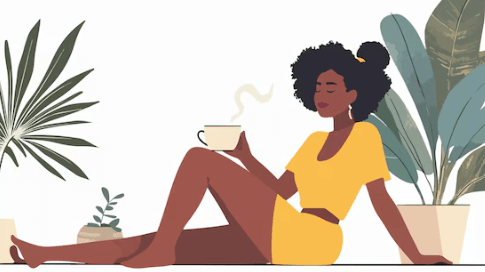
The Moment I Couldn’t Keep Pushing
There came a point when my nervous system whispered what my pride didn’t want to hear: “You can’t do this anymore.”
The constant grind of nine-to-five life, the side business, the several roles I played each day, the noise, the fluorescent lights, the endless performance of “normal”- my body began refusing it all.
So, I stopped fighting my design. I began practicing something I now call the art of self-accommodation: the gentle, sacred process of building a life that honors how I’m actually wired, not how the world tells me I should be.
What Self-Accommodation Really Means
Self-accommodation isn’t laziness, avoidance, or luxury.
It’s alignment.
It’s recognizing that rest, silence, and softness are not indulgences; they’re requirements for your nervous system to thrive.
For me, that’s meant:
- Leaving the traditional workforce to create income through coaching, storytelling, and social media- spaces where I can pace my energy and work in flow.
- Showering by candlelight, because bright lights overwhelm me, but warmth and flickering glow calm my body instantly.
- Spending long hours in forests and at the beach, because the sound of wind and water resets my entire sensory system.
- Driving in silence, because music-while beautiful-sometimes adds too much input when I just need to think or breathe.
- Wearing soft dresses, because tight waistbands or structured outfits feel like sensory cages.
- Choosing quiet salons or private suites for self-care, where I can receive care without being overstimulated.
- Going off-grid after social days, because I need solitude to recover from stimulation, even if the connection was joyful.
These choices aren’t quirks; they’re accommodations. They’re the ways I give myself what I was always waiting for someone else to grant me: permission to be exactly as I am.
Why Self-Accommodation Is a Spiritual Practice
When we begin honoring our needs instead of explaining them away, we reclaim sovereignty over our bodies, energy, and time.
Every adjustment becomes an act of devotion:
- Saying no before burnout arrives.
- Choosing silence instead of constant input.
- Making softness the standard, not the reward.
This isn’t just emotional intelligence, it’s nervous system stewardship. It’s what happens when healing matures into self-trust.
What It Looks Like for You
Your accommodations might look completely different from mine, and that’s the beauty of it.
For some, it’s scheduling buffer days between meetings.
For others, it’s living near water, working from bed, or wearing noise-canceling headphones at the grocery store.
It might be hiring help, taking meds, or simply allowing yourself to do less.
Ask yourself:
- When do I feel most safe in my body?
- What textures, sounds, or environments soothe me?
- What does “enough” actually feel like for me?
Then, build your days around those answers. That’s not weakness; it’s wisdom.
Closing Reflection: The Life That Fits
Every time I choose stillness over survival mode, I remind myself: I’m not fragile; I’m finely tuned.
The world may not have been built for how I move through it, but that just means I get to build my own world: one that’s quiet, lush, and entirely mine.
So, here’s to every woman who’s done pretending she’s okay in a life that overwhelms her.
Here’s to the candlelit showers, the long walks in nature, the dresses that don’t pinch, and the unapologetic disappearances after a day of socializing.
This is the art of self-accommodation.
This is how we heal without asking permission.
Want to create a softer existence, but you don’t know how? Set up time for us to connect and craft a life that you love.
 Black Girls Living Lavishly
Leave a comment